Tuesday, 3 November 2015

Organic Angove Cuvee Brut Sparkling


Angove Organic Cuvee Brut.


The silly season is here!  In the next few months there are going to be a multitude of occasions where a sparkling wine of good quality, and not outrageous cost, is required.  The Angove Cuvee Brut meets all the criteria of a delicious sparkling wine that isn’t too hard on the hip pocket.

With an attractive pale straw colour, and a fine effervescent mousse, this wine is appealing on first pour.  There is a clean aroma of lively citrus with apple and pear hints.  After making suitable toasts it’s time to get sipping, and this drop doesn’t disappoint.  The citrus and apple flavours follow through on the palate, backed up with stone fruit sweetness and a more subtle nutty finish.  The finish has surprising length, and draws you in for another taste.

Made with 100% Chardonnay grapes (often labelled Blanc de Blanc), which were picked early to retain that delicious acidity that is needed in a sparkling wine.  The grapes were gently pressed and cold settled.  A carefully selected yeast strain was introduced to the wine, which had an extended period of time in contact with the lees to develop a subtle yeasty toastiness before it was all sealed in a bottle.

This wine is organic and vegan friendly.  It is ready to drink right now, and is perfect as an accompaniment to smoked salmon blinis, or better yet, freshly shucked oysters.

At this price, it’s worth grabbing a dozen so that you always have one on hand for drinks with colleagues, Spring racing or Christmas parties.  If you like a bit of variety you can browse our full range of organic sparkling wine. A bottle of fizz is always great idea as a gift for friends, or your kid’s teachers…or even just because the weather is nice and you feel like a little sparkly treat for yourself! 

Buy some here from $13.25

Happy drinking!

Sunday, 25 October 2015

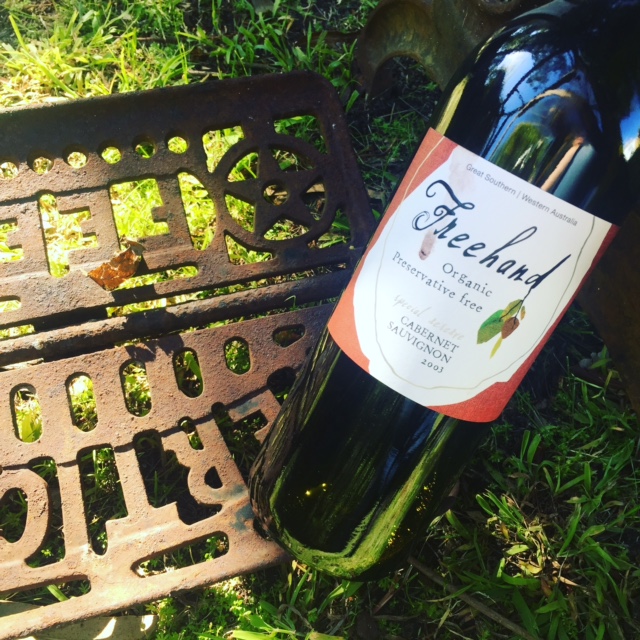
Aged Preservative Free Wine! Freehand Natural Wines 2003 Cabernet.


AGED PRESERVATIVE FREE WINE!

Since the dawn of winemaking time there have been arguments about just how long a bottle of wine will last if we don't use preservatives of some kind (usually sulphur dioxide 220 or potassium metabisulphite 224. If you want to know more about preservatives in wine read this article).  Many of the preservative free wine producers opt for the conservative approach making the wines in a "drink now" style, they advise a maximum cellaring of 1-2 years, and only produce smaller quantities that will sell out before the next vintage.

Matt Eastwell and his pals at Freehand Natural Wines have decided to push the envelope on this one, and all I can say is THANK GOODNESS THEY DID!  We now have in our stock an incredible Aged Preservative Free Cabernet, 2003 Vintage.  Before I rave on about the wine, let me rave on about Freehand… A relatively new winery in the Great Southern Wine Region of WA, Freehand is what it says it is.  A non-certified, organic and biodynamic vineyard.  Wines are produced by Matt and his highly committed team.  They are passionate about the environment and making sure that this vineyard and the earth in general are in better nick when it comes time for them to leave it.  These lovely people are to be admired for their philosophies and the way they grow grapes and produce wine.  Don't let the lack of certification put you off!

Now to the wine, sigh… The 2003 Cabernet is a deliciously mellow drop.  Made gently by hand with small, intensely flavoured berries it has a gorgeous cherry red colour, with orange highlights around the rim.  First sniff leaves you with lovely aged characters of leather beeswax and tobacco leaf, and just a little earthiness.  Basically it makes you want to just dive right on it.  But don’t rush it, this wine has been waiting 12 years to be tasted, so please spend some time savouring each of the elements.  The mouth feel is oh so velvety and silky smooth.  It’s a bit dangerous really, as it’s very easy to find yourself at the bottom of the bottle without too much effort.  The flavour profile is cedary with a savoury edge, and just a hint of blackberry fruit, although as the wine breathes it seems to change and evolve with each mouthful. I'm sure, if we'd managed to leave some in the bottle for the night, it would have had a totally new flavour profile in the morning.  This wine has aged exceptionally well, and could easily get away with claiming to be a few years younger.  

It is delicious and a bargain for $30 or under. Buy it here!

Happy drinking!

Sunday, 11 October 2015

How to store wine.

So, have you got yourself a wee collection of wines that you've been purchasing over the years?  Some might have been gifts, others lovingly collected from a weekend of exploring cellar doors with mates.  Some might be organic, others not.  I don't know about you, but I've begun to grow up when it comes to wine.  No longer do I need to drink ALL THE WINE in one sitting with pals.  I am happy to buy a bottle and have it tucked away until the right time.  Sadly, for many this can all end in tears when a bottle isn't stored correctly.  


Before I got into this wine caper I confess that my bottles of wine were stored in the bottom of my kitchen cupboard.  There was easy access, and it was as good a place as any considering I didn't have a wine rack, or a cellar, or a convenient backyard cave, with steady temperatures to squirrel my bounty away in.  Now I'm a bit more savvy and try a bit harder to make sure my bottles of precious vino are as well stored as possible given my limited space, and lack of a fore mentioned cave.  I confess to being a bit lucky in that my parents have a cellar at their home in the mountains.  If I have a particularly special bottle I can always VERY CLEARLY LABEL IT WITH MY NAME, and pop it in among their collection.  So far there have been no accidental consumption incidents.

I hear you...no cellar, no cave.  What to do?  Well, I've got a few tips for keeping your wine at its best for as long as possible.  I do have to say, please read your labels though. Ifa wine maker suggests that a particular wine would benefit from 5 years of cellaring, don't wait for 15 and then wonder why it's not great...  common sense peeps.
How's this for a nifty little cellar.  I'm sure I could fit this under my stairs...?

I've got a few tips on storing your wine and keeping it in the most optimal conditions.  I've read quite a bit on the subject, and the phrase that springs to mind and is easily remembered is 'Keep it cool, keep it dark, keep it still, keep it sideways'.  Pretty simple really.

Wine is a pretty delicate thing which is always evolving and changing within the bottle, and outside influences can interfere with the delicate dance happening beneath the cork.


Wine and bright lights are not best friends.  Most coloured wine bottles offer a small amount of protection against UV  light.  However, it isn't enough to keep your wine from being effected by light, which will prematurely age your wine.  White wine is particularly vulnerable to this, but red wine is also at risk.


It's best to store your wine in a cool, dry dark place with a constant temperature (between 12-16 °C).  If you don't have a cellar (which of course is the best place to keep your wine), keep it in the box it came in in a dark place (there must be a spot in the bottom of a cupboard somewhere?).  Ideally there should be some humidity to prevent the cork from drying out.  If you're feeling really flush you could buy one of those fancy (or less fancy) thermo-controlled wine fridges (of course this is another electrical appliance which needs to be plugged in and takes up space...but if you're a real buff might be worth it).

Shake, rattle and roll.  I don't think so.  Wine doesn't like to be shifted about or exposed to vibrations and movement.  Try keeping it away from your fridge, on its side on a rack (this ensures the cork is always covered with liquid and won't dry out).  If you keep your bottles upright you increase the chances of oxygen making its way into your bottle and oxidizing the wine.  Of course, corks can be a bit of a rarity these days, so the chances of oxidization are greatly reduced, and cork taint is almost unheard of!


Very importantly it must be remembered that not all wine is designed to be cellared.  And even those that are may only be suitable for a short cellaring period.  Many preservative free wines are made to be drunk quite soon after bottling.  Please, please, follow the instructions of the wine maker.  They want you to enjoy their wine, and will be giving you the best advice on when to drink their nectar.  


Many people that that white wine is not meant to be cellared.  This simply isn't true.  Many whites are intended to age gracefully, their flavour profiles changing and maturing along the way with secondary characters and complexity only developing with time. Think Riesling, Semillon and Chardonnay.  Red wines will always prefer some time in a bottle to allow all the goodness to harmonise.  Be it Shiraz, Cab Sav or Pinot, let the fruits, tannins and acids find their place before opening!  Be patient.  And then....
Happy drinking!


Monday, 5 October 2015

Being a FRUGAVORE

I'm a bit of a 'frugavore' these days.  If you've not heard of the term is was the recent title of a book by Arabella Forge and essentially outlined how we could live more sustainably, more locally and hence more cheaply by cutting back on excesses, growing our own food, etc, etc.  It's not rocket science, but it does take a bit of an effort.  It helps that I work from home (while raising three small children), and that I pull in enough money from all my little bits and bobs to get in home child care when I need a few hours to smash out a blog post, or write some assessment documents (that's right, my life is not all about wine!), or cook up a pot of stock, or a huge meat sauce.  It also means I have the ability to search out the cheapest local produce to cook with!

 Wherever possible I try to buy organic produce, however in my old age I am beginning to see just how important food miles are, and free range of course.  My priorities have shifted a bit and I'd buy a locally grown, seasonal, free range product over organic if push comes to shove.  I will also choose free range eggs over organic.  Gotta love a happy hen!

The best way to be a frugavore is to grow your own vegetables, and if possible to keep a couple of happy hens who will keep you in eggs.  Obviously it is cheaper if you are a vegetarian, which I am not, but we do try and eat mostly vegetarian meals, with meat appearing on the menu only a few times a week, and then in small quantities (a 100 gram steak is all I'd ever dish up to my family members).  It's also really helpful to think about meals further ahead than 'tonight'.  For example, tonight I am poaching a whole chicken with a bunch of vegetables.  The kids will eat the chicken and veggies for dinner.  We grown ups will have the chicken with a salad from the garden, and tomorrow I will make a soup from the broth.  The rest of the chicken will go for a few more days, with bits for the soup, for wraps for kids lunches, and possibly in a pasta dish.  There won't be any waste (except for the bones) and I know that we will be eating nutritionally, and cheaply, for at least 4 evening meals this week from that one starting point.  Any broth left over I'll freeze for another day, always good for risotto or the like.  A bit of planning will really save you in the long run.

I've got a few tips below on how to keep your grocery costs as low as possible (I spend about $50 a week on fresh vegetable/fruit produce for a family of five, plus about another $100 on dry good, bread, milk, meat and incidentals like toiletries, cleaning products and such).  I'd love to hear your tips, so feel free to leave me a comment!


1.  SHOP SEASONALLY!  When I was a bit younger and had more time to fiddle around in the kitchen making amazing meals to impress my friends I would buy whatever I needed at whatever cost...WTF was I thinking?!  Now I buy only what is in season and Australian (preferably from my own state).  No more Peruvian asparagus, or Chillean blueberries.  If it's not in season, it's not hitting my table.  Yes, this can be a bit dull.  My kids are thoroughly sick of apples and pears by mid-winter.  When those first punnets of strawberries and blue berries become available it's like Christmas (literally!).  Fortunately, we can all adapt, and sometimes we could all use a lesson in what it means to fly exotic fruits across the planet.  Global warming is that lesson.  I'd rather have a planet that we can live on than a mango out of season.


2.  Find your local fruit market and use it!  I walk up to the Brunswick Market every week and do my shop.  The produce lasts the whole week, is local and fresh.  It's also lovely to see the cultural groups who live in your area doing their shopping.  The Brunswick Market is super 'Turkish', so lots of Evil Eyes, Halal meat and okra are on offer.   I can always get a piece of cheese, or locally packed spices, which is great and it keeps my menu ideas interesting. 


3.  Cut back on the meat.  Yep, no-one NEEDS a 500 gram t-bone steak to meet their iron needs.  Meat is expensive and just not necessary in such quantities (or at all if you are willing to balance your diet in other ways).  Try reducing your portions, or making several of your meals 'meat free'.  Your body will thank you for it, and so will your wallet.

4.  Don't go shopping when you're hungry.  Seriously.  How did that packet of chips end up in your trolley?

5.  Have a vegetable plot and grow seasonal veggies in it.  Leafy greens like chard or kale are always a winner (and dead easy to keep alive), beans, peas, tomatoes, Asian greens, herbs, the sky is the limit depending on space.  Nothing is more impressive than cooking up a meal with ingredients entirely grown in your own garden.


6.  Get into food trading!  My neighbours and I have a 'food swap' situation going on.  Each of us cooks up something on a three weekly rotation and delivers it to the others in the swap.  It's awesome!  One night a week we have a meal delivered that we didn't have to cook.  Many a time it's been a lifesaver, for all concerned.

7.  Buy and cook in bulk.  Large sacks of rice.  Big batches of Bolognaise sauce, or Passata.  These things will freeze, or last for ages, and mean you have meals at the ready...less takeaway baby!

If you've got the time have a look at Arabella Forge's Foodwise site.  It's pretty clearly laid out and shows how a bit of thought and effort can help you live more cheaply and healthily!

Of course - WINE. as an aside if thinking about your carbon footprint is important to you when it comes to selecting what wine you drink please have a look at our website.  Wineries that produce organic wine tend to care about the way they produce their grapes.  Sustainable practices are often at the forefront of their production.  They aim to lessen their impact on the earth, and leave it in better nick than when they found it.  You can see that buying organic wine isn't only better for you, but better for the planet.   Most of the wines we sell are Australian (no, not all of them, but most), and many have super light glass bottles (again, not all...Kalleske you know I'm talking about you...).  Making a wine bottle as light as possible means that it has less of a carbon footprint when it's being shipped, locally or from overseas.  Many of our Temple Bruer bottles are uber light, and our Spanish wines by Vicente Gandia are prime examples of a 'lean green' light wine bottle, perfect for the export market.  'Phew,' I hear you say...thank goodness there is no need to stop drinking wine in order to be a frugavore!

Happy drinking! 


Sunday, 27 September 2015

Food and Wine Pairing: Shiraz.


So, today's wine for food pairing is SHIRAZ!


I've chosen to start with the 'King of Reds'.  Shiraz (or Syrah) is pretty much the most popular red wine there is on the Australian market (and Australia is the biggest producer of Shiraz in the world).  And yes, it is pretty darn delicious.  If you're a straight up Shiraz drinker, please don't neglect the other red wine varietals.  Pinot, Merlot and poor old Cabernet Sauvignon get so overlooked, especially with a spike in popularity of European varietals like Tempranillo and Sangiovese.  But never fear, we will get to all of them in due course.  For now we'll start at the very beginning. 


So, Shiraz can come in many guises.  It's a versatile grape and depending on where it was grown, cool or warm climate, and how it is made into wine, there is a huge range in flavours and characters that can be produced.  This versatility really helps when looking at food pairing, because essentially you can probably find a Shiraz which will tick any box you need it to; lighter bodied and savoury, or sticky dark fruit flavours with intense tannins.  In general Shiraz is quite a full bodied fruity drop.  There are notes of charred summer fruits, pepper, liquorice, berries, currants and even chocolate.  It is distinctive and delicious.

Shiraz pairs well with beef.  However duck and pork with heavily flavoured savoury sauces also work well (mmmm, Peking Duck!).  Shiraz doesn't really work quite so well with cheeses.  It you really only drink Shiraz (perhaps it's time to expand your horizons a bit!), and want to eat cheese at the same time, try a creamy cheese like Camembert or Brie.  Even a smoked softer cheddar would work well.


I'm a big fan of Shiraz, and we've got loads of it in our organic and preservative free range.  I find it hard to go past the Paxton MV Shiraz for price and excellence, James Halliday gave it 95 points recently, and for a wine at the $20 price point this is nothing short of outstanding, we've also got the amazingly special Paxton Jones Block... so worth a little splurge.  It's no secret that I'm also a fan of the Kalleske Moppa, it's BIG, and impressive, the hearty flavours leave you in no doubt that this is indeed a Shiraz.  Oh, and I couldn't neglect to mention the Bunn Shiraz, it's warming and spicy all wrapped up in rich velvety fruit flavours.  Man, I am so having a bottle of Shiraz tonight.  You can read up on our range on our website, and if you feel so inclined put in an order for a bottle or two.

Now to what I've been eating while sipping shiraz... In my recent food adventures, I've been playing around with Beef Wellington.  Seriously, if you haven't tried this dish, GET ONTO IT.  It is nothing short of amazeballs.  For the uninitiated it is a prime cut of fillet beef, wrapped in pates and prosciutto, surrounded with flaky pastry.  Baked in the oven and served with a rich red wine sauce, wilted greens (or green beans) and creamy-buttery mashed potatoes, it is my 'death row last meal'.  So, so good.  (**Pauses from writing to wipe drool off chin).

I've tried a few different recipes for BW, but one that I really liked, and was pretty simple, is by potty mouthed chef Gordon Ramsay.  I'll include it here, with my own adaptations, plus a recipe for a velvety sauce to go with it.   


Gordon Ramsay's Kick A#*@

Beef Wellington.

Ingredients

  • 400g flat cap mushrooms, roughly chopped
  • Sea salt and freshly ground black pepper
  • Olive oil, for cooking
  • 750g piece of prime beef fillet
  • 1-2 tbsp English mustard
  • 6-8 slices of Parma ham
  • 500g ready-made puff pastry (or a couple of puff pastry sheets joined up)
  • Flour, to dust
  • 2 egg yolks, beaten
To keep the pastry light and crisp, I wrap the beef and mushrooms in a layer of prosciutto to keep the pastry free from moisture (sort of, there is always some seepage).  Some people even use thin crepes, but I can't resist the salty parma ham!

Method

  1. Put the mushrooms into a food processor with some seasoning and pulse to a rough paste. Scrape the paste into a pan and cook over a high heat for about 10 mins, tossing frequently, to cook out the moisture from the mushrooms. Cook for longer if you need to.  Spread out on a plate to cool.
  2. Heat in a frying pan and add a little olive oil. Season the beef and sear in the hot pan for 30 secs only on each side. (You don't want to cook it at this stage, just colour it.) Remove the beef from the pan and leave to cool, then brush all over with the mustard - I like lots of mustard, and have found that the cooking process seems to mellow the 'hot' flavour, so don't be frightened to go hard.
  3. Lay a sheet of cling film on a work surface and arrange the prosciutto slices on it, in slightly overlapping rows. With a palette knife, spread the mushroom paste over the ham, then place the seared beef fillet in the middle. Keeping a tight hold of the cling film from the edge, neatly roll the prosciutto and mushrooms around the beef to form a tight barrel shape. Twit the ends of the cling film to secure. Chill for 15-20 mins minimum to allow the beef to set and keep its shape.  (You could even complete this part of the process the day before).
  4. Roll out the puff pastry (or use the shop bought sheets) on a floured surface to a large rectangle, the thickness of a $2 coin. Remove the cling film from the beef, then lay in the centre. Brush the surrounding pastry with egg yolk. Fold the ends over, the wrap the pastry around the beef, cutting off any excess. Turn over, so the seam is underneath, and place on a baking sheet. Brush over all the pastry with egg and chill for about 15 mins to let the pastry rest.
  5. Heat the oven to 200ºC.
  6. Lightly score the pastry at 1cm intervals and glaze again with beaten egg yolk. Bake for 20 minutes , then lower the oven setting to 180ºC and cook for another 15 mins. Allow to rest for 10-15 mins before slicing and serving with the accompaniments. The beef should still be pink in the centre when you serve it.
For my sauce I started with about 500 mls of BONE BROTH (this is just a super duper version of stock that has been slow cooked for 70 odd hours...sooooooo good!).  I get this boiling away on the stove then add a good slug or two of red wine, SHIRAZ in this instance.  I continue to cook until the sauce is reduced by about half and is quite thick, if it isn't thickening up well enough (or if you've just used regular stock), take out about 3 tablespoons of liquid and mix in 1 tablespoon of plain flour until you've formed a smooth paste, then return to the sauce.  As a final thickener and to add that bit of glossy deliciousness add a good tablespoon of butter.  Taste and then season with salt, pepper, and any other flavour profile you'd like (maybe a hint of chili, or a whack of hot English mustard?).  Basically tinker about with the sauce until you get a consistency, and flavour, that you like.

So, there you have it, what to eat when you've got a cracking Shiraz to drink.  And if you haven't got one on hand, drop by our website and order some!

Happy drinking!

Wednesday, 16 September 2015

How to make Red Wine Vinegar.

It happens to the best of us... a bottle of red is opened and a glass or two consumed (possible late in the evening, probably after a few too many other bottles), and the drinkers give up and go to bed.  Sadly this bottle is neglected (possibly due to a hangover and the vehement promise to never drink again!!) and over several days later is has lost that freshness and is no longer wanted.  And let's face it, if it was the last bottle at the end of a big night it was probably not your best (or sadly it may have been your best that you grabbed while under the influence and miserably regret not having first up).  Instead of tipping this poor ignored wine down the sink, why not get all frugavore on yourself and make RED WINE VINEGAR!?

I've made Red Wine Vinegar before and seriously it was delicious.  There is not much better than making a dressing, or a meat sauce, with a vinegar that you've lovingly tended to... plus it really does mean that those last few dregs, or forgotten half bottles of wine, don't go to waste. Also, if you're looking to make Christmas gifts for all those distant relatives, colleagues, or random people who all come out of the wood work during the silly season, this vinegar, poured into a nice bottle with your own label is a primo present!

So, to make your own vinegar you have a couple of options...

Option 1.

With this option you've got to get yourself a vinegar 'starter' mother.  Yes, MOTHER.  Making vinegar isn't that far off making kombucha, so you'll fit right in with the Hipsters.  You can get a 'mother' from a brew, or wine making, shop.  I live in the inner north in Melbourne - Italian heartland - so there are a few shops around with all the right gear.  A simple google search of your neighbourhood will point you in the right direction.  Once you got your slimy mother, simply follow the instructions that it comes with.

Instead of adding a purchased mother, you could add 3 tablespoons of 'live' vinegar (Bragg's, or if someone you know makes vinegar, some of their batch, for example) per cup of wine, and follow the steps in option two. 
The mother from a batch of Red Wine Vinegar.
Option 2.

GROW YOUR OWN MOTHER and let the wine do its thang.  I was taught how to do this by a Spanish friend of mine (he really wasn't a big drinker so there was always a glass or two left in the bottom of his bottles), so I like to think it's more 'authentic' and European...

First you have to find a jar, or jug, or a cooking pot, with a wide mouth (the wider the better).  Pour your wine in until the container is about two-thirds full.  Don't be tempted to over fill as you will make spills later in the process.  If you have a good low alcohol wine it's good as is, if you have a higher alcohol wine, mix in a bit of water to dilute it.  The high alcohol content can cause essential bacteria to curl up and die, or at least not grow so well.  I highly recommend you use a no added preservative wine in this process, as sulphites can (rightly so) overly 'preserve' the wine, and inhibit the conversion of alcohol to acetic acid.  

Cover the container with a breathable muslin cloth and secure with a rubber band or string.  Nothing worse than spending weeks waiting for awesome vinegar to find that it's full of dog hair, or dust.  

Place your container in a warm place, out of direct sunlight.  

Shake or stir your vinegar (carefully so as not to slop!) a few times a week.  

Over this time you will become the proud creator of a 'mother'.  It is a slimy, blobby thing that sits on top of the wine, eventually sinking to the bottom and allowing a new mother to take its place. 

In anywhere between 2 weeks to 2 months, you will have a lovely lot of vinegar (or something not quite vinegar which means tip it out and head back to the drawing board).

Once your brew tastes more like vinegar and less like wine (start tasting at the 2 week mark) you should pour it into bottles or jars that seal (swing top beer bottles, or old wine bottles are great).  Prolonged exposure to the air can spoil your vinegar.

You can pour off your vinegar, and can keep adding fresh wine to the remainder of the brew (mother included).  The newly added wine will be 'vinegarised' much more quickly than your first batch.


Now, if you find yourselves in the position where you don't ever have left over wine (I won't judge you), you might like to grab a bottle of our affordable preservative free cleanskin red as a starter.  You could even, once you got this down pat, try a white wine vinegar, or add herbs and the like for extra flavour. 

No more wasted wine!  Get mixing now to have vinegar in time for Christmas.  

I'd like to say 'Happy drinking', but think that this might not be the best sign off today.  So, Ciao!